

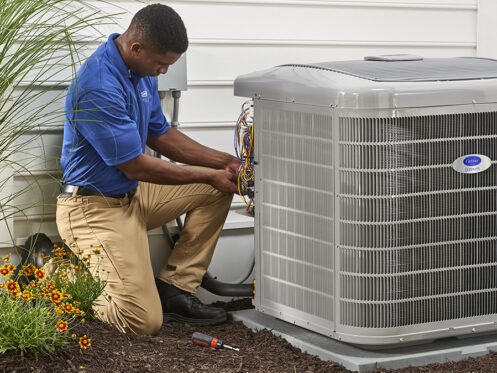
One minute your AC is running full tilt, and the next it shuts off before your house cools down. Soon, it’s starting and stopping again. If your air conditioner is short cycling, something’s interrupting its normal cooling process. The problem could be dirty air filters, thermostat issues or refrigerant leaks. Left unchecked, constant restarts can wear down your unit, drive up energy bills and leave you sweltering in the Michigan heat.
What Does AC Short Cycling Mean?
When your AC is short cycling, it’s stuck in a pattern of turning off too early. Since there isn’t time to reach the optimum indoor temperature, the unit soon tries again, switching on and repeating the short cycle.
Under normal conditions, an air conditioner runs for at least 10 to 20 minutes, depending on outdoor temperature, humidity, thermostat settings and the size of your unit. Once your home is evenly cooled, your AC takes a break, restarting only when it senses the temperature rising.
A short cycle lasts just a few minutes, which doesn’t give your AC enough time to properly cool your home and remove moisture from the air.
Why Short Cycling Is a Problem
A short cycling AC can escalate into serious and costly issues, including:
- Energy waste: Air conditioners consume a lot of energy when they turn on, so you’ll be using more electricity if your unit repeatedly kicks in throughout the day.
- Uneven cooling: It won’t take long to feel Detroit’s hot, sticky summer temperatures inside your home if your AC turns off too early.
- Wear and tear: Parts wear out faster if your air conditioner runs too frequently, leading to costly repairs or replacement.
- Moisture buildup: A short cooling cycle doesn’t give your AC enough time to remove humidity from the air. This may leave your home feeling damp and create an environment for mold and mildew growth.
AC Short Cycling Causes and How to Fix Them
A short cooling cycle is often caused by mechanical, airflow or electrical issues. Let’s take a look at some common reasons for AC short cycling and how to resolve them.
Thermostat Sensors
Your thermostat is responsible for telling the AC when to turn on and off, based on indoor temperature. It can cause frequent cycling if it’s registering room temperature incorrectly and sending the wrong signals to your air conditioner.
What to do: Make sure the indoor temperature is set properly and the thermostat has adequate battery power. A thermostat that’s placed too close to a vent or heat source can throw off the sensors. An HVAC technician can inspect your thermostat and replace or recalibrate it if necessary.
Obstructed Airflow
Air needs to flow freely to allow your air conditioner to do its job. When airflow is restricted, your AC may overheat or shut down prematurely.
Dirty air filters are the most common culprit. Air filters trap debris to protect sensitive parts inside the unit, but dirt buildup can block airflow.
What to do: Inspect and replace air filters regularly. If short cycling continues, you may need a professional to check for blocked vents, dirty coils and ductwork problems.
Low Refrigerant
Refrigerant is a substance that absorbs heat from warm air so your AC can send cooler air into your home. If your unit doesn’t have enough refrigerant to complete the cooling process, the system shuts off for safety reasons.
What to do: Refrigerant may be low or leaking if you notice hot air blowing from the air conditioner, liquid pooling around the unit or ice buildup on the coils. Contact an HVAC contractor to diagnose and repair leaks and top up refrigerants to the appropriate level.
Air Conditioner Size
Oversized ACs are a common problem, according to Energy Star, as going big doesn’t mean faster cooling. A too-big air conditioner can trigger short cycling by sending too much cold air into a small space. Your thermostat incorrectly thinks the house has cooled and shuts off before the entire home reaches a comfortable temperature.
It’s more efficient to have a right-sized air conditioner providing a lower but appropriate volume of cool air for your home. The cold air can then mix with warmer air and evenly cool your house during a normal cycle.
What to do: Ask an HVAC professional to assess your system. They can evaluate factors such as square footage and ceiling height and determine if your air conditioner is the appropriate size for your space.
Electrical Issues
There’s a complex network of electrical components within an HVAC system. Loose wiring and damaged connections can interrupt communication and cause your AC to turn off too soon. Flickering lights, buzzing and tripped breakers can be signs of a wider electrical problem.
What to do: Electrical repairs should only be handled by professionals. If you suspect an electrical issue within your unit, turn off the system and call an HVAC contractor to safely handle high-voltage parts.
Preventing AC Short Cycling
HVAC companies can efficiently diagnose and fix a short cycling AC. But the best way to fend off common air conditioner problems? Change air filters frequently and book a maintenance checkup. During an AC tune-up, HVAC contractors inspect your air conditioner, ductwork and thermostat to ensure everything is in peak condition and ready for Michigan’s summer weather.