

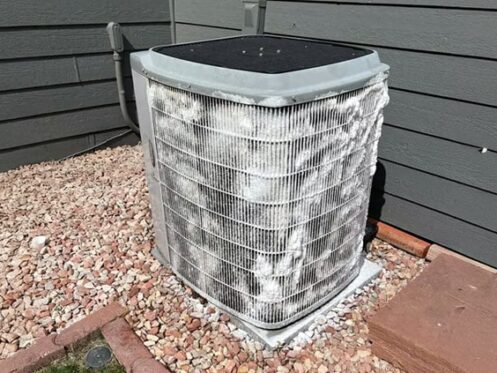
Your AC condenser sits in your yard completely exposed for 12 months straight. Cottonwood fluff, stray branches, heavy rain and yard waste can build up in your HVAC machinery throughout the year if you’re not careful.
Clogged AC condensers struggle and run constantly to compensate, hiking up your electric bills and making it harder to cool your Michigan home’s bedrooms during those muggy nights. Protect your investment with a few quick steps to keep your home comfy and cool.
Does Cottonwood Season Affect Your AC Condenser?
Your air conditioner pulls heavy humidity out of the air, keeping your home cool in the Michigan summers. The collected moisture drips into a pan and drains outside through a small PVC pipe. In springtime, fluffy cottonwood seeds blow past the metal guards on your outdoor unit and land in that wet environment.
Those little seeds mix with everyday dirt and algae to form a solid plug deep inside the AC condenser drain line. When the water can’t empty outside, it backs up and overflows the indoor pan. Standing water causes dampness that ruins nearby drywall and warps your flooring, but you can stop it by cleaning the outdoor equipment early in the season.
How to Prevent Damage From Debris
Some proactive yard work keeps the cottonwood and debris away from your cooling equipment:
- Rake away dead leaves, grass clippings, stray mulch and fallen twigs.
- Trim nearby shrubs to create a 2-foot gap of empty space on all sides so fresh air flows freely around the unit.
- Turn off the power at your main breaker panel before spraying a foaming AC condenser cleaner directly onto the metal fins, then rinse it away with a garden hose angled downward.
- Pour a cup of plain white vinegar down the indoor access pipe every few months to safely kill mold and minor blockages without harsh chemicals.
Can I Prepare My AC Condenser for Storms?
Follow these tips to prevent severe damage to your AC if high winds hit:
- Cut back heavy tree limbs hanging above the unit so high winds don’t snap any weak wood.
- Move patio furniture and heavy planters indoors to stop strong gusts from turning loose furniture into AC weapons.
- Fit a protective mesh cover over the top and sides of the machinery if you live in a storm-prone area.
- Clear gravel and loose twigs from the base of the machine to prevent heavy rain from splashing mud into electrical components.
- Flip the breaker to your central cooling system if a major electrical storm approaches so power surges from local lightning strikes don’t travel through the lines.
More AC Maintenance Tips for Detroit Homeowners
Take a walk around your outdoor equipment every few weeks to look for obvious signs of wear, paying extra attention to the thick copper refrigerant line connecting the house to your AC condenser unit. If you spot thick ice building up on that pipe during a hot afternoon, there’s a good chance your system is leaking coolant or struggling to pull air through a dirty filter.
Another trick is listening to the fan motor at switch-on and shutdown. A loud screeching noise means a motor bearing is failing, and a persistent rattle points to hardware vibrating loose inside the metal casing. If you have a dog, keep an eye on where they pee in the yard because it can wreck aluminum. Urine eats through the delicate exterior fins and can cause an expensive coolant leak. Putting up a little decorative border fence a few feet back so the unit can still breathe takes away temptation.
Check if your clothes dryer vents are too close to the condenser. If they are, every time you dry a load of towels, that vent shoots hot air and sticky lint straight at the machine. The AC fan sucks that damp fuzz right into the metal coils, and it quickly builds up like a thick blanket that chokes off the airflow. If your vents sit close together, you can snap a plastic deflector onto the dryer pipe to point the exhaust the other way.
AC Condenser Replacement Costs
Do you think a storm or cottonwood buildup has damaged your equipment beyond repair? Replacing older machinery is probably the answer. AC condenser replacement costs between $300 and $4,200, but your home’s square footage, the brand you choose, your warranty and the energy efficiency rating of the new model all affect price.
Upgrade to a model with a high Seasonal Energy Efficiency Ratio (SEER) and you’ll reap savings on your utility bills for years to come. Newer units use less electricity than older models, and some barely make a sound. If you take proper care to maintain your AC condenser, you can relax and enjoy the Michigan summer knowing your house will stay cool and comfortable throughout.