

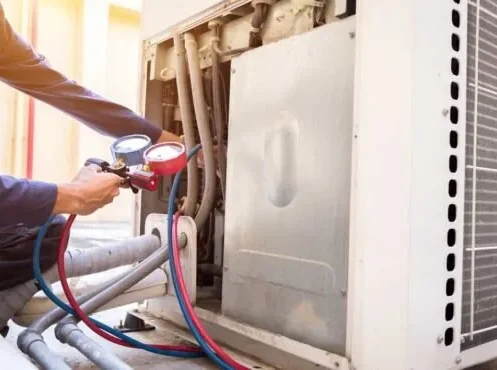
When your air conditioner quits in the middle of a sticky, humid night or blows warm air during the hottest part of the day, you’ll feel the Michigan heat pretty quickly. That’s when you’ll need an AC emergency repair company.
This guide explains which air conditioner issues you can troubleshoot yourself and when it’s time to call an expert to keep your space cool and livable. Learn tips for choosing an emergency air conditioning repair service, staying comfortable while your AC is out and keeping your HVAC in good shape year-round to help prevent future breakdowns.
When It’s Time for HVAC Emergency Service
Occasionally, you can resolve AC issues yourself, but some situations need an experienced HVAC professional:
- Burning odors or unusual noises, such as banging and grinding, suggest a mechanical or electrical issue. A certified, licensed contractor has the knowledge and tools to inspect and handle electrical connections and complex parts.
- Watch for signs your AC is leaking. Liquid refrigerant is used to cool air and requires careful handling and disposal by a trained HVAC technician. They can also figure out why your unit is leaking and repair it.
- Blocked vents and malfunctioning parts can cause an AC to freeze. Because air isn’t flowing properly inside the unit, temperatures drop around the evaporator coils. This causes ice to form on the coils or water to pool around the unit. You might think you need emergency plumbing repair if there’s water on the ground, but leaks related to your cooling system are best handled by HVAC experts.
To prevent further damage or strain on your system, turn off your AC if you notice any of these problems, and contact an air conditioning emergency repair company near you.
When to Troubleshoot Your AC Yourself
If you give your air conditioner the once-over and don’t notice unusual noises, smells or leaks, there may be a simple fix.
Here are a few tips to try to get the cold air flowing again:
- Make sure your thermostat is set to cooling mode and that the desired temperature is set lower than the current indoor temperature. Replace the batteries if the display screen appears faint, and ensure that no programmed settings are preventing the system from turning on.
- Check your electrical panel and reset any breakers that may have tripped, which could have cut power to your air conditioner.
- Inspect your AC’s filters, which trap and prevent dirt from accumulating inside the unit. Dirty filters can interfere with air flow and performance, so swap them for clean ones.
- Inspect your outdoor unit and remove leaves, sticks and other debris that may be piling up. There should be a couple of feet of clear space to maximize airflow. Make sure the fan is working and listen for unusual noises that could indicate a malfunction.
Choosing an Emergency Heating and Cooling Company
If you’ve checked your thermostat, electric panel and AC filters and your AC still doesn’t turn on or deliver steady, cool air, ask a qualified technician to take a look. Emergency HVAC companies in the Greater Detroit area can quickly assess the problem and get your air conditioning working again.
When you’re sweltering inside your home, it’s tempting to book the first company that promises to restore your system, but it’s worth researching different contractors.
Here are a few things to look for in an HVAC company to ensure prompt, expert service:
- Select a company that provides 24/7 emergency AC service. Companies in Clinton Township and Farmington Hills can get booked quickly during heatwaves, and timely visits are important for keeping your home livable.
- Check that the company is fully licensed and insured. Technicians with NATE certification have demonstrated they have key qualifications and training, including knowledge of regulations and safety practices.
- Do your homework. Read reviews to see how other customers in your area rate the company’s service and professionalism.
Tips to Stay Cool While Waiting for Emergency Air Conditioning Repairs
The heat can build quickly inside your home while you’re waiting for your HVAC technician to arrive. You can take steps to manage indoor temperatures and improve airflow to stay comfortable until the repairs are complete.
Those steps include:
- Keeping curtains or blinds closed during the day to block sunlight.
- Using electric fans to keep air circulating through your home.
- Using an outdoor grill or microwave to prepare food instead of operating the oven or stovetop.
- Hanging your clothes to dry instead of running the clothes dryer, which generates more heat.
- Closing your windows to keep hot air out if the temperature outdoors is higher than indoors.
- Opening your windows when it’s cooler outside to let in fresh air. Placing a fan at the window, facing in, can help draw in cool air.
- Spending time in the basement or lower levels of your home, as heat rises to the upper floors.
- Drinking plenty of fluids to stay hydrated.
- Placing a wet towel in the freezer for about 15 minutes, and apply it to your neck or forehead for quick, cooling relief.
Keep Your AC Running Smoothly Year-Round
Air conditioning breakdowns can cause discomfort and frustration, especially when temperatures are spiking. You can reduce the chances of an emergency repair during the summer months by maintaining your HVAC system year-round.
To keep your HVAC system running smoothly:
- Schedule spring maintenance. Book an annual AC tune-up to get your air conditioner ready for the summer. During a maintenance visit, a technician tops up the refrigerant, inspects and cleans internal components and looks for cracks or worn components that should be replaced.
- Change air filters regularly. Swap out dirty filters every 1 to 3 months to maintain efficiency and performance.
- Replace aging units. Air conditioners last an average of 10 to 15 years. If your unit is getting old and isn’t working as effectively, consider replacing your AC before it fails.
- Monitor your HVAC. Don’t ignore issues that signal a serious problem with your heating or cooling system. Putting off repairs can worsen damage and cost you more in the long run.